Home & Comfort Buying Guide
Best Ergonomic Pillows: What Should You Look For?
We break down the key factors worth comparing before choosing an ergonomic pillow — including shape, materials, sleeping position, support and overall value.
Independent Buying Guide • Updated September 2026
Continue Reading Our Full Buying Guide ↓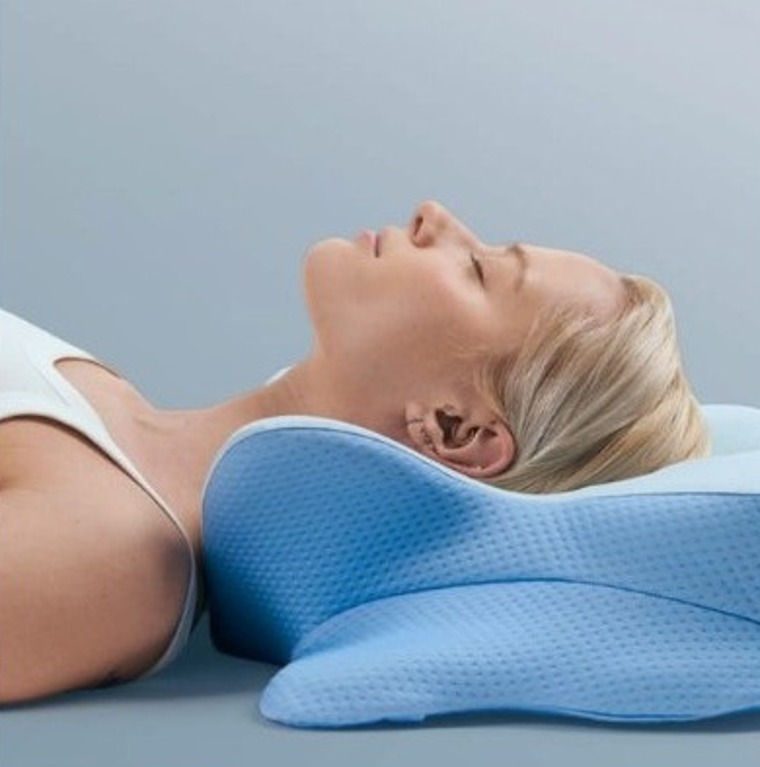
Featured Pick
Derila Ergo
A contoured memory-foam pillow designed around ergonomic shape, sleeping comfort and everyday use.
- Contoured ergonomic shape
- Memory-foam construction
- Compact design
- Available through the official website
Affiliate disclosure: We may earn a commission if you purchase through our links, at no additional cost to you.
Quick Takeaway
Compare ergonomic pillows on the specifics a listing can actually verify: shape and contour profile, fill material, loft (height) measurements, firmness description, cover material and washability, dimensions, weight and the seller's return window.
The right pillow depends heavily on your usual sleeping position and body size, so treat comfort as personal preference rather than something a product page can promise. A pillow is a comfort product, not a treatment for any medical condition.
“Ergonomic pillow” is a marketing description rather than a regulated standard. It generally refers to pillows shaped to follow the contours of the head, neck and shoulders instead of using a flat, uniform rectangle of fill. Within that broad description, products differ enormously in shape, material, height and firmness.
This guide is written for shoppers comparing options before buying. It explains the design choices behind these pillows, which measurements are worth checking, and what to confirm about a listing before ordering online. It does not rank products, score them, or make any claim about health outcomes.
Pillow Shape and Ergonomic Design
The most visible difference between an ergonomic pillow and a conventional one is its profile. Contoured designs typically include a recess for the head with a raised area along the edge intended to fill the gap between the neck and the mattress. Some use a symmetrical wave shape; others are wedge-shaped, butterfly-shaped, or have two different edge heights so you can flip the pillow to change the loft.
Shape matters mainly because it determines where support sits and how much you can adjust it. A deeply moulded pillow holds one posture fairly firmly, while a softer, gently curved one allows more movement through the night. Neither approach is universally better; people who change position often tend to prefer less aggressive contouring.
- Check whether the product photos show actual measured dimensions rather than a stylised illustration
- Look for whether both edges are the same height, or whether the pillow is designed to be flipped
- Consider how much you move at night before choosing a strongly moulded shape
Memory Foam and Other Materials
Most contoured pillows use viscoelastic polyurethane foam, commonly called memory foam, because it holds a moulded shape and slowly conforms under pressure and body heat. Variants include gel-infused foam, shredded foam that can be added or removed, and open-cell foam marketed for airflow.
Alternatives include latex, which is generally more responsive and springs back faster; polyester fibre fill, which is inexpensive and light but compresses over time; buckwheat hulls, which are firm, heavy and adjustable; and down or down-alternative fills, which are soft but hold a contour poorly.
Material also affects smell and settling. Foam products frequently have an initial odour after unpacking that dissipates with airing, and compressed or roll-packed pillows usually need time to expand to their stated dimensions.
- Solid foam: holds a defined shape, less adjustable
- Shredded foam: adjustable loft, less precise contour
- Latex: firmer and faster to rebound, usually heavier
- Fibre fill: light and inexpensive, flattens sooner
Sleeping Positions
Sleeping position is the single most useful filter when narrowing a shortlist. Side sleepers have the widest gap to fill between the ear and the outer shoulder, so they generally look at higher-loft options. Back sleepers usually need less height, enough to keep the head from tipping forward or falling back. Stomach sleepers typically need the least height of all, and many contoured designs are simply too tall for them.
Most people are combination sleepers who shift between positions. If that describes you, a dual-height or more forgiving profile is usually easier to live with than a deeply sculpted single-position shape.
- Side sleeper: taller loft, firmer edge support
- Back sleeper: medium loft with neck contact
- Stomach sleeper: low loft, softer fill
- Combination: flippable or moderately contoured designs
Pillow Height and Support
Loft is the pillow's height when uncompressed, and it is the specification most often missing from product listings. Where it is given, check whether the figure refers to the raised edge, the central recess, or the pillow at rest before any weight is applied.
Firmness interacts with loft: a soft pillow with a stated 12 cm loft may compress to far less under the weight of a head. Mattress firmness matters too, since a soft mattress lets the shoulder sink and effectively reduces the gap a pillow needs to fill.
- Look for both edge height and centre height where available
- Consider your mattress firmness alongside the pillow loft
- Adjustable-fill designs let you correct a loft mismatch after delivery
Breathability
Dense foam traps more heat than open, airy fills. Manufacturers address this with ventilation holes, open-cell foam structures, gel infusions and perforated covers. These features can help airflow, though the effect varies by room temperature, bedding and the individual sleeper.
Cover fabric plays a large part as well. Knitted polyester, bamboo-derived viscose and cotton all behave differently against the skin, and a thick quilted cover can reduce the benefit of a ventilated core.
Removable and Washable Covers
Pillows accumulate sweat, skin oils and dust over time. A removable cover with a full-length zip makes routine cleaning far simpler than a sewn-in one.
Care instructions matter as much as removability. Foam cores generally must not be machine washed or tumble dried; most manufacturers advise spot cleaning the core and washing only the cover. Check whether a second cover is included or sold separately, since laundry days are easier with a spare.
- Confirm the cover is removable and machine washable
- Check the stated wash temperature and drying instructions
- Check whether standard pillowcases fit the pillow's shape
Size and Portability
Contoured pillows are often sold in a single size that does not match standard, queen or king pillowcase dimensions. Before ordering, compare the listed length and width against the bedding you already own and against the width of your bed.
Weight and compressibility matter if you travel. Solid foam pillows are bulky and do not pack down well; shredded-fill and smaller travel-sized versions are easier to carry. Check shipped weight and whether the pillow arrives vacuum-compressed, along with how long it needs to regain full shape.
Returns and Guarantees
Comfort products are difficult to judge before use, so the return policy is a meaningful part of the purchase. Read the stated window, whether the pillow can be returned after being slept on, who pays return shipping, whether a restocking fee applies, and whether the offer differs between the manufacturer's own store and third-party marketplaces.
Warranties on pillows usually cover manufacturing defects such as seam failure or a foam core that does not recover its shape, rather than a change of mind. Read what is actually covered rather than relying on the headline number of days or years.
- Length of the return window and when it starts
- Whether used or slept-on returns are accepted
- Who pays return shipping, and any restocking fee
- What the warranty covers, and what voids it
What to Check Before Buying Online
Online listings vary widely in how much they disclose. Before ordering, it is worth collecting the same set of facts for every product on your shortlist so the comparison is genuine rather than based on presentation.
- Exact dimensions and loft, in stated units
- Fill material and cover fabric composition
- Care and washing instructions
- Total price including shipping and any taxes
- Who the seller of record is, and where the item ships from
- Return window, return conditions and warranty terms
- Whether any subscription, bundle or recurring charge is attached to the offer
What Matters When Choosing an Ergonomic Pillow?
Apply the same criteria to every pillow on your shortlist so differences in marketing do not distort the comparison.
Shape & Contour
How pronounced the contour is, and whether the pillow can be flipped for a different height.
Memory Foam & Materials
Solid foam, shredded foam, latex, fibre or another fill, and whether the amount can be adjusted.
Pillow Height
Stated loft at the raised edge and at the centre, plus how firm the product is described as being.
Sleeping Position
Whether the design is described for side, back, stomach or combination sleeping.
Breathability
Ventilation, open-cell structure, gel infusion and how breathable the cover fabric is.
Cover & Cleaning
Removable, washable cover with clear care instructions for both the cover and the core.
Size & Portability
Whether it fits your bed and existing pillowcases, its weight, and how easily it travels.
Returns & Purchase Terms
Total price, shipping, return window, return conditions and warranty coverage.
Product Spotlight
Why Derila Ergo Is Worth a Closer Look
Derila Ergo is one contoured memory-foam pillow readers may encounter while researching this category. The characteristics below are drawn from how the product is described by its manufacturer, and are set against the buying criteria in this guide so you can judge whether they match what you need. They are not test results, and comfort remains highly individual.
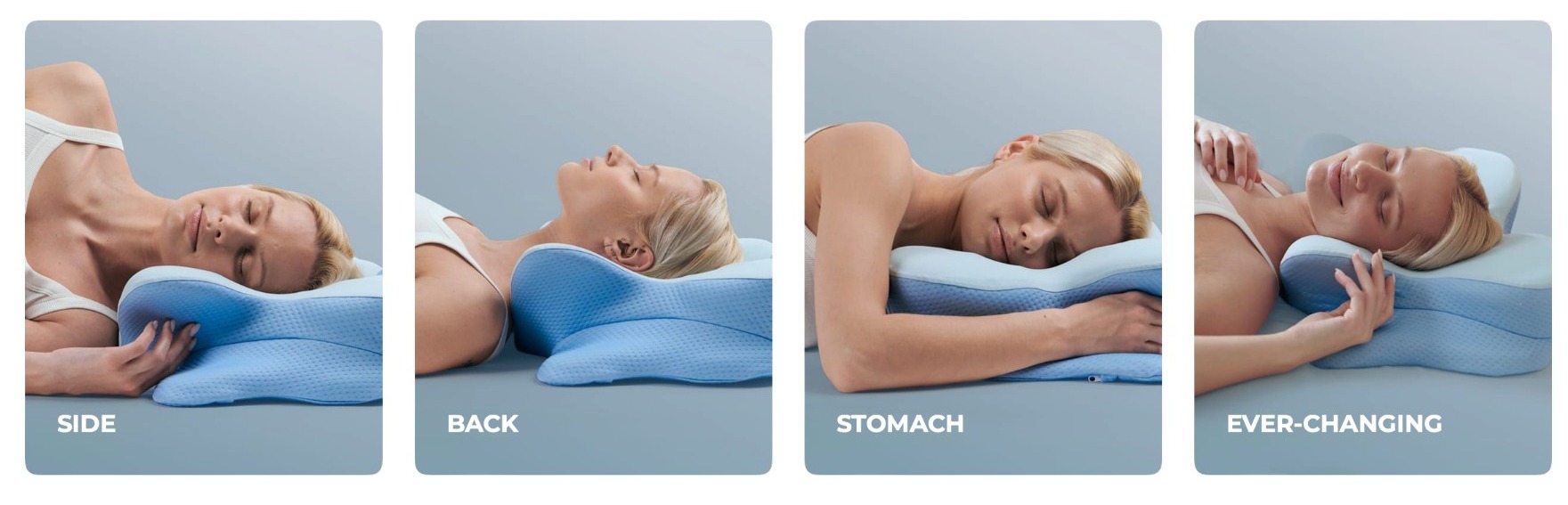
Butterfly-Shaped Contour
A recessed centre with raised side wings and cut-outs at the edges, so the arm can rest under or alongside the pillow. This is the shape characteristic described in the criteria above; how well it suits you depends on your usual position.
Memory-Foam Core
A viscoelastic foam core that holds its moulded shape and conforms gradually. As with any foam pillow, check the expansion time after unpacking and the care instructions for the core.
Removable Quilted Cover
The manufacturer describes a quilted, removable cover certified to OEKO-TEX Standard 100, a textile testing standard for harmful substances. Confirm the wash temperature and whether a spare cover is included.
Positioned for Every Sleeper
Marketed for side, back, stomach and combination sleeping. Position fit is personal, so compare the stated loft against your shoulder width and mattress firmness before ordering.
Want to check the current specifications, pricing and purchase terms?
Affiliate disclosure: We may earn a commission if you purchase through our links, at no additional cost to you.
How Clever Cart Guide Evaluates Products
Our evaluations consider product information transparency, manufacturer information, features or ingredients disclosed by the manufacturer, ease of use, purchasing terms, refund information, verified price and value, and overall consumer considerations.
We do not accept payment in exchange for positive ratings, and we do not claim to have personally tested a product unless the article explicitly states that it was tested by Clever Cart Guide. Read the full method on our How We Review page.
Before You Buy an Ergonomic Pillow
Take this with you to any product page, in this category or another.
- Shape — I know how contoured the pillow is and whether it can be flipped
- Material — I know the fill material and the cover fabric composition
- Pillow height — I have the stated loft at the edge and at the centre
- Sleeping position — the design matches the position I use most nights
- Cover — I have confirmed whether the cover is removable
- Cleaning instructions — I have read the care guidance for cover and core
- Dimensions — the pillow fits my bed and my existing pillowcases
- Return policy — I know the return window and its conditions
- Shipping terms — I know delivery cost, timing and where it ships from
- Price — I know the total amount charged, with no recurring charges attached
Frequently Asked Questions
Continue Reading
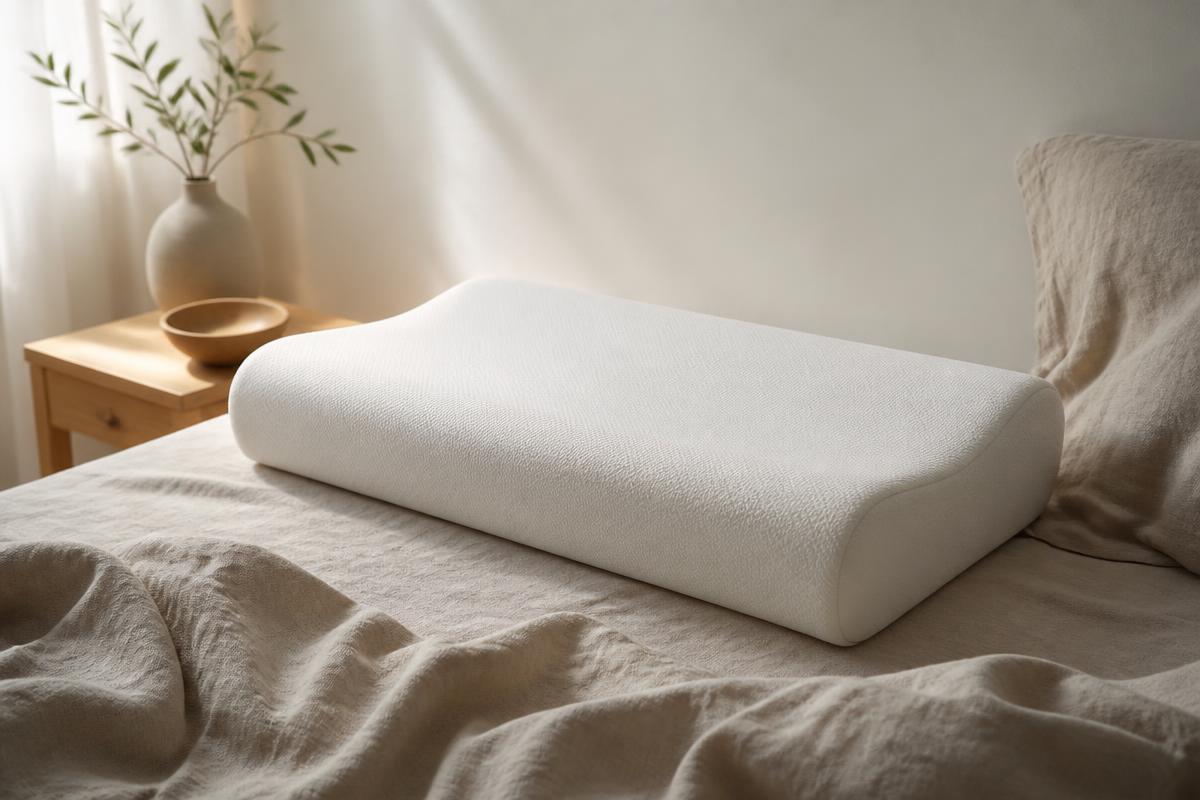
Home & Comfort · Updated September 2026
Memory Foam Pillows: What to Know Before Buying
Foam pillows are described in broadly similar language but behave very differently in practice. Here is what the specifications actually tell you.
8 min read
Read Article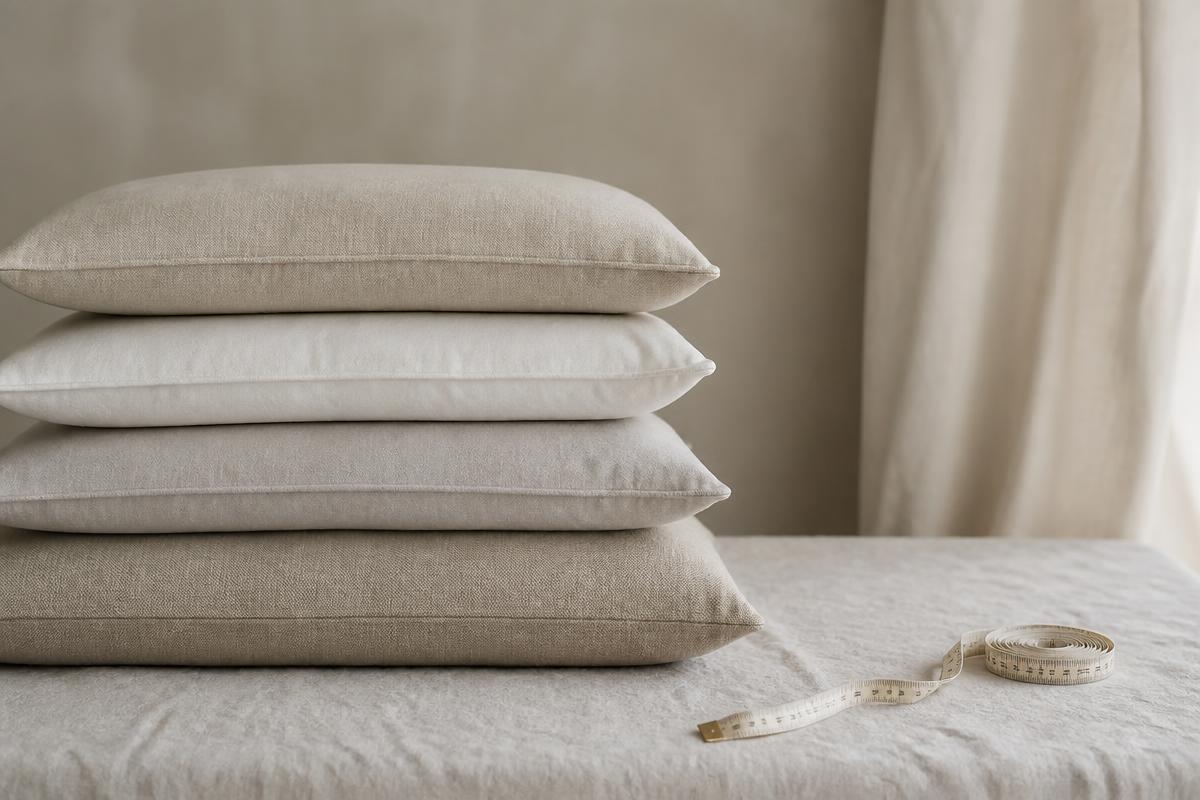
Home & Comfort · Updated September 2026
How to Choose the Right Pillow Height
Loft is the specification most often ignored and the one most likely to make a well-reviewed pillow feel wrong for you.
7 min read
Read Article
Home & Comfort · Updated September 2026
Pillows for Side, Back and Stomach Sleepers: What to Compare
Position is the first filter in any pillow decision — it changes the loft, the firmness and often the shape you should be shortlisting.
8 min read
Read ArticleAbout Clever Cart Guide
Clever Cart Guide creates independent buying guides designed to help consumers compare products, understand product features and make more informed purchasing decisions. We are not the manufacturer or seller of any product mentioned on this page.