Home & Comfort · Research Article
Memory Foam Pillows: What to Know Before Buying
Foam pillows are described in broadly similar language but behave very differently in practice. Here is what the specifications actually tell you.
Quick Takeaway
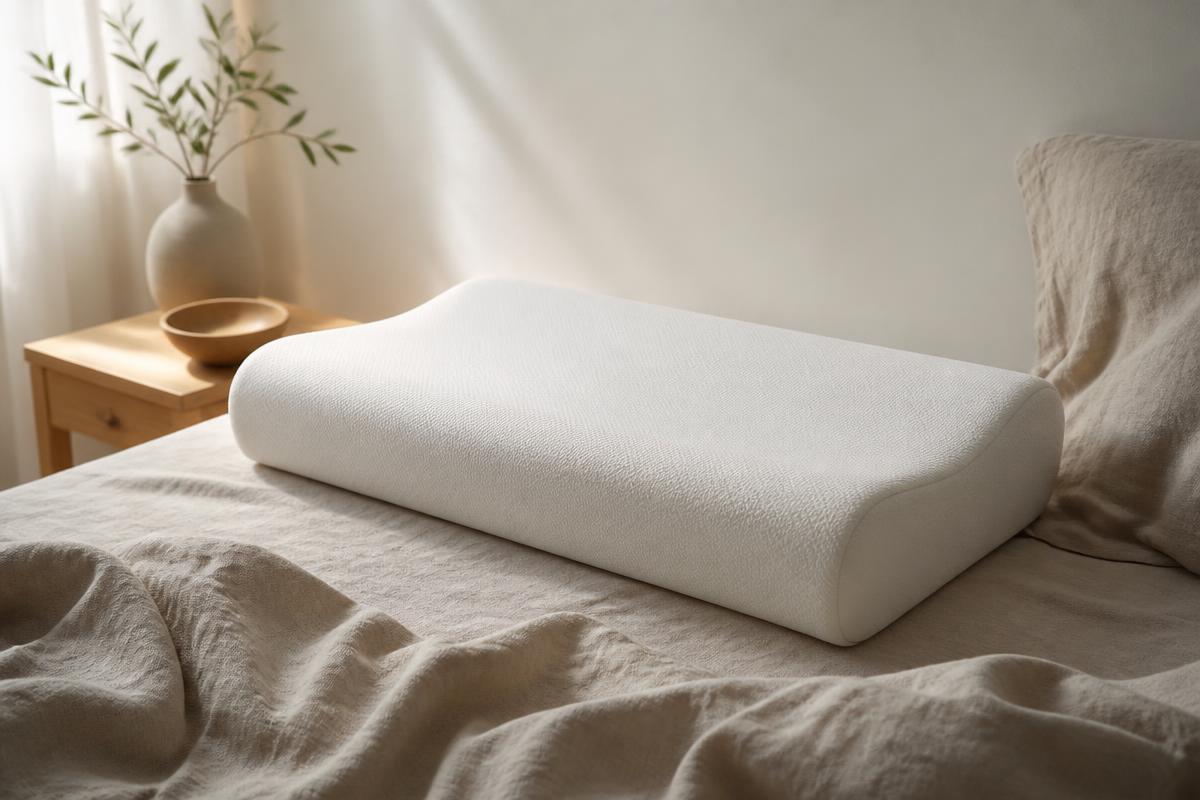
Memory foam is a viscoelastic material that softens with body heat and pressure, then slowly returns to shape. That behaviour is why foam pillows hold a contour instead of flattening like a loose fill.
Before buying, check whether the foam is solid or shredded, the stated density and firmness, whether the fill is adjustable, how the cover is cleaned, how long the pillow takes to expand after unpacking, and the seller's return window.
Almost every ergonomic pillow sold online is made of some form of memory foam, and almost every listing describes it in the same way: supportive, breathable, pressure-relieving. Those words are marketing language, not specifications, and they do not help you tell two pillows apart.
What separates one foam pillow from another is a short list of verifiable details: the construction of the fill, the density and firmness of the foam, what the cover is made of, and the terms attached to the purchase. This article explains each of those so you can read a product page critically rather than taking its adjectives at face value.
What Memory Foam in a Pillow Actually Is
Memory foam is polyurethane foam treated to be viscoelastic — it responds to heat and pressure by softening, conforms to the shape pressing into it, and then recovers slowly once that pressure is removed. This is the property behind the slow-sinking feel people associate with the material.
Because the foam softens with warmth, the same pillow can feel firmer in a cold bedroom and softer on a warm night. This is normal behaviour for the material rather than a defect, but it is worth knowing if you sleep somewhere with large temperature swings between seasons.
Solid vs Shredded Memory Foam Pillows
This is the single most useful distinction on a product page, and it changes how the pillow behaves more than any other factor.
A solid or moulded foam core is a single block cut to a fixed shape. Contoured and ergonomic pillows are almost always solid, because the shape is the product. The advantage is consistency: the surface does not shift during the night. The trade-off is that the height and firmness are fixed — if the loft is wrong for you, nothing can be adjusted.
Shredded foam is chopped foam that behaves more like a traditional pillow. It can be reshaped, it usually breathes better because air moves between the pieces, and many shredded pillows have a zip that lets you remove or add fill to change the height. The trade-off is that the fill can clump or migrate and may need to be redistributed by hand.
- Solid or moulded core: fixed shape and height, consistent surface, no adjustability.
- Shredded fill: reshapeable, often adjustable via a zip, more airflow, but can shift or clump.
- Hybrid designs: a shaped core with a shredded layer on top — check which part is which.
Memory Foam Pillow Density vs Firmness
Density describes how much material is packed into a given volume, and it is usually quoted in kilograms per cubic metre or pounds per cubic foot. Higher-density foam generally holds its shape longer over years of use. Firmness describes how hard the pillow feels under pressure. A foam can be dense and still feel soft, so a listing that quotes only one of the two is telling you half the story.
Very few pillow listings publish a density figure at all. When one does, that is a small point in its favour: it is a measurable claim rather than an adjective. When none is given, treat firmness descriptions as approximate and weigh the return policy more heavily, because trying the pillow is the only way to find out.
Heat, Airflow and Cooling Memory Foam Claims
Solid foam is a closed, dense material, so it traps warmth more readily than loose fills such as down or polyester fibre. Manufacturers address this in three common ways: perforating or channelling the foam, infusing it with gel or graphite, or pairing it with a cover woven to feel cool to the touch.
None of these turn a foam pillow into a cooling device, and there is no standard test behind the phrase "cooling pillow". Read the claim as a description of construction — perforated foam, gel infusion, a particular cover fabric — and judge whether that construction makes sense for how warm you sleep. If a listing says "cooling" with no explanation of the mechanism, there is nothing there to evaluate.
Unpacking, Expansion and Off-Gassing of Foam Pillows
Foam pillows are usually vacuum-compressed for shipping and arrive flat. Full expansion commonly takes between a few hours and two days depending on the foam and the temperature of the room, and a pillow judged on its first night out of the box will often feel wrong simply because it has not finished expanding.
New foam also frequently has a chemical smell when first unwrapped. It generally fades within a few days of airing, and the CertiPUR-US and OEKO-TEX Standard 100 marks are the two certifications most often cited in relation to what foam and textiles are tested for. A certification is a testing standard, not a comfort guarantee.
- Check the stated expansion time before judging the pillow.
- Air the pillow in a ventilated room before first use if it has a noticeable smell.
- Note whether the return window starts from delivery — expansion time eats into it.
Memory Foam Pillow Covers, Cleaning and Care
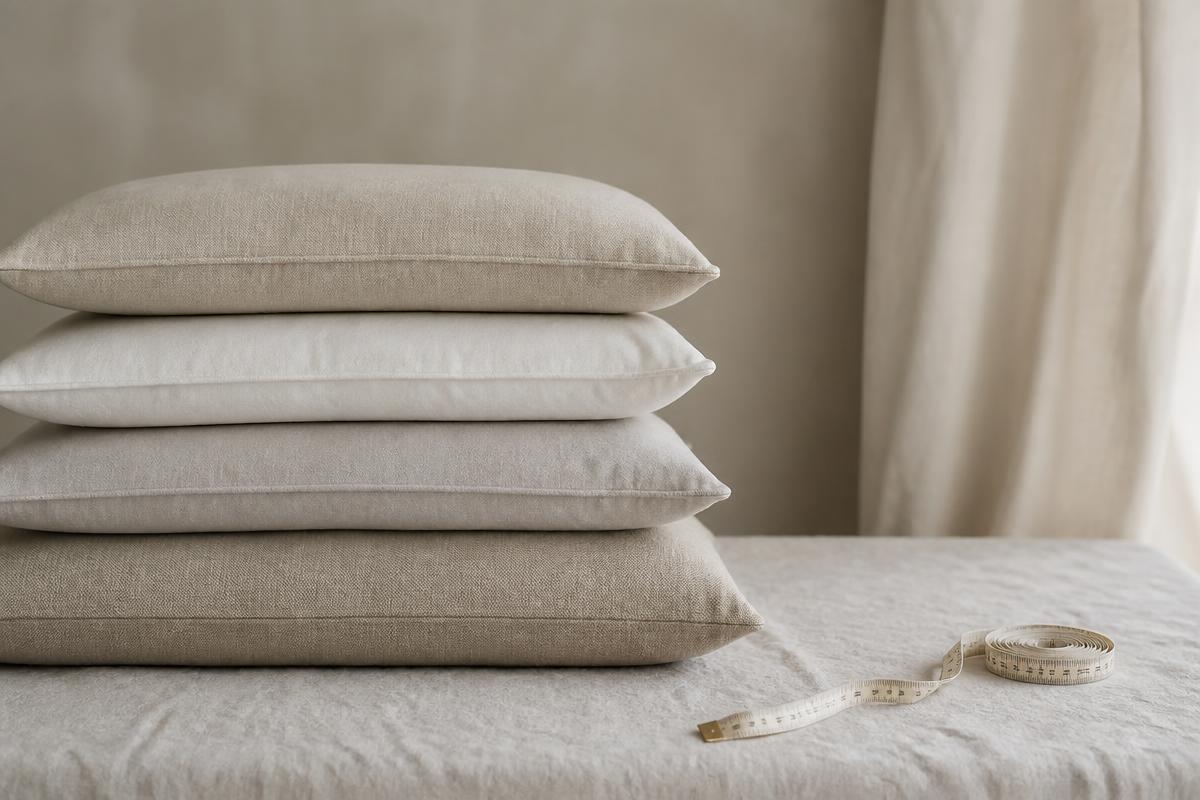
A solid foam core generally cannot be put in a washing machine; water breaks the foam down and soaking it is the most common way people ruin an otherwise fine pillow. That makes the cover the part that actually gets cleaned, so check whether it is removable, whether it is machine washable, at what temperature, and whether a spare is included or sold separately.
Longevity depends on the foam more than on the cover. Foam gradually loses resilience and stops recovering fully, and the usual sign that a pillow has reached the end of its useful life is a permanent dip where your head rests. Manufacturers commonly suggest replacement in the two-to-four-year range, though this varies with use and with the quality of the foam.
Memory Foam Pillow Specs to Check Before Buying
Everything above comes down to a small set of details a seller either publishes or does not. A listing that answers all of them is not automatically selling a better pillow, but it is giving you enough information to make a real comparison — and a listing that answers none of them is asking you to buy on adjectives alone.
- Is the fill solid, shredded or a hybrid, and is it adjustable?
- Are exact dimensions and loft height given in centimetres or inches?
- Is a density or firmness figure published, or only a descriptive word?
- What is the cover material, and how is it washed?
- How long does the pillow take to expand after unpacking?
- What is the return window, and who pays return shipping?
Before You Buy a Memory Foam Pillow
Take this with you to any product page, in this category or another.
- Confirm whether the fill is solid or shredded
- Look for a density or firmness figure
- Read the exact dimensions and loft height
- Check what any cooling claim actually describes
- Note the stated expansion time
- Confirm how the cover is removed and washed
- Read the return window and who pays return shipping
Frequently Asked Questions
Continue Reading
Home & Comfort · Updated September 2026
Best Ergonomic Pillows: What Should You Look For?
We break down the key factors worth comparing before choosing an ergonomic pillow — including shape, materials, sleeping position, support and overall value.

11 min read
Read GuideHome & Comfort · Updated September 2026
How to Choose the Right Pillow Height
Loft is the specification most often ignored and the one most likely to make a well-reviewed pillow feel wrong for you.
7 min read
Read Article
Home & Comfort · Updated September 2026
Pillows for Side, Back and Stomach Sleepers: What to Compare
Position is the first filter in any pillow decision — it changes the loft, the firmness and often the shape you should be shortlisting.
8 min read
Read ArticleAbout Clever Cart Guide
Clever Cart Guide creates independent buying guides designed to help consumers compare products, understand product features and make more informed purchasing decisions. We are not the manufacturer or seller of any product mentioned on this page.